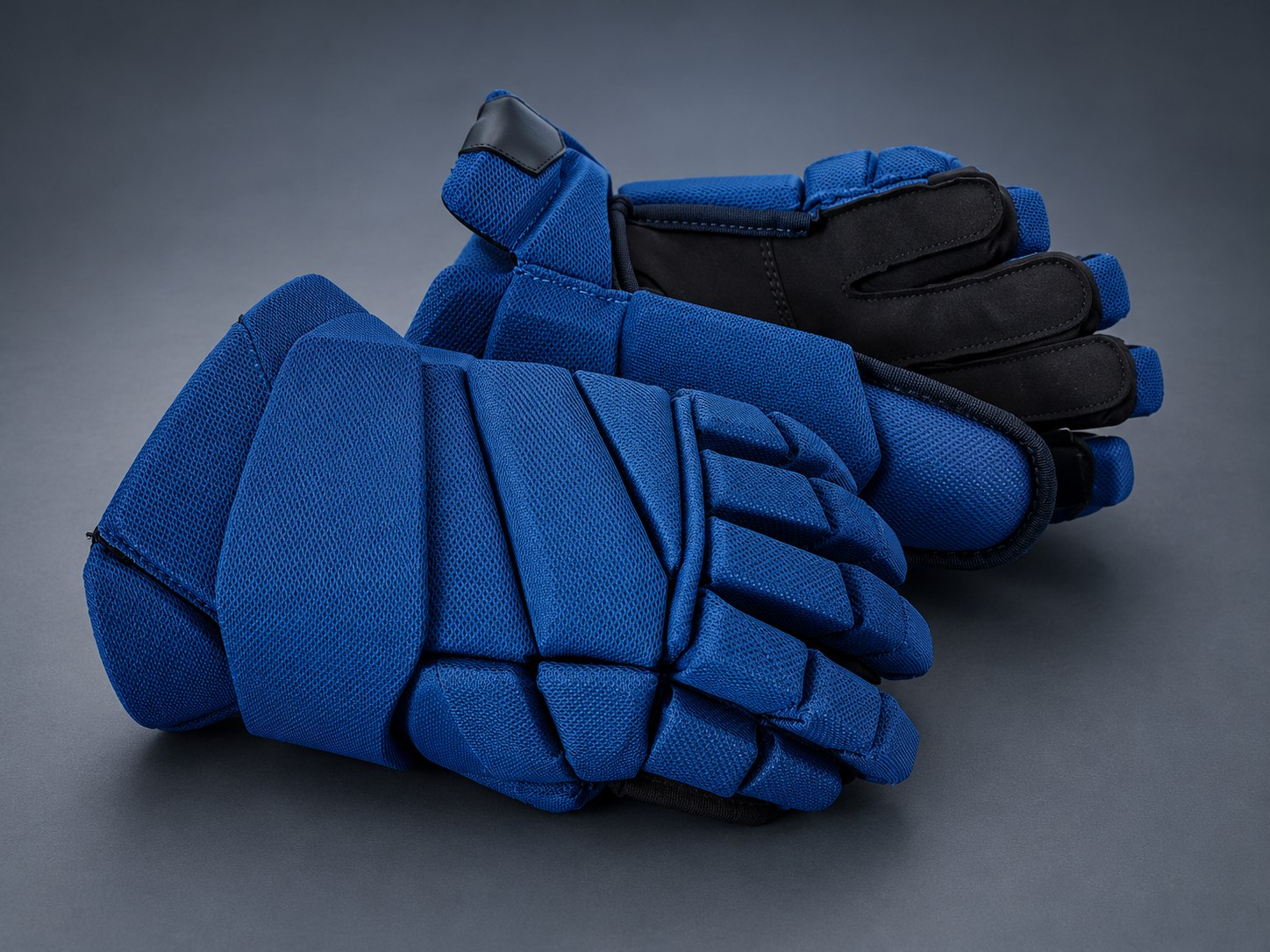
Editorial review: KSM Product Development Team · Updated 8 October 2026
Use hand measurement as a starting point, then verify finger seating, palm alignment, wrist coverage and stick grip in the actual glove platform. For teams, record every player in a roster size matrix and confirm uncertain sizes before placing the bulk order.
Why the size label is only a starting point
Hockey glove sizes are commonly expressed in inches, but two gloves carrying the same size can feel different because of hand volume, finger shape, cuff design and fit architecture. A tapered glove can feel closer at the wrist than a traditional-volume glove even when both carry the same nominal size.
Age categories such as youth, junior, intermediate and senior are useful for organizing a range, but age alone should not determine the order. Players of the same age can have different hand proportions and preferences.
1. Record a consistent hand measurement
- Keep the hand relaxed and fingers straight, without stretching them apart.
- Measure from the base of the palm or wrist crease to the tip of the middle finger.
- Record the result in the same unit for every player.
- Note unusual hand width, long fingers, existing glove size and preferred fit.
The measurement method must be consistent across the roster. It is more useful as a comparison tool when everyone follows the same instruction.
2. Check four fit points
Natural seating
Fingertips should sit comfortably without excessive compression or a large empty gap.
Aligned flex point
The palm and glove should bend with the player's hand instead of pulling across it.
Useful coverage
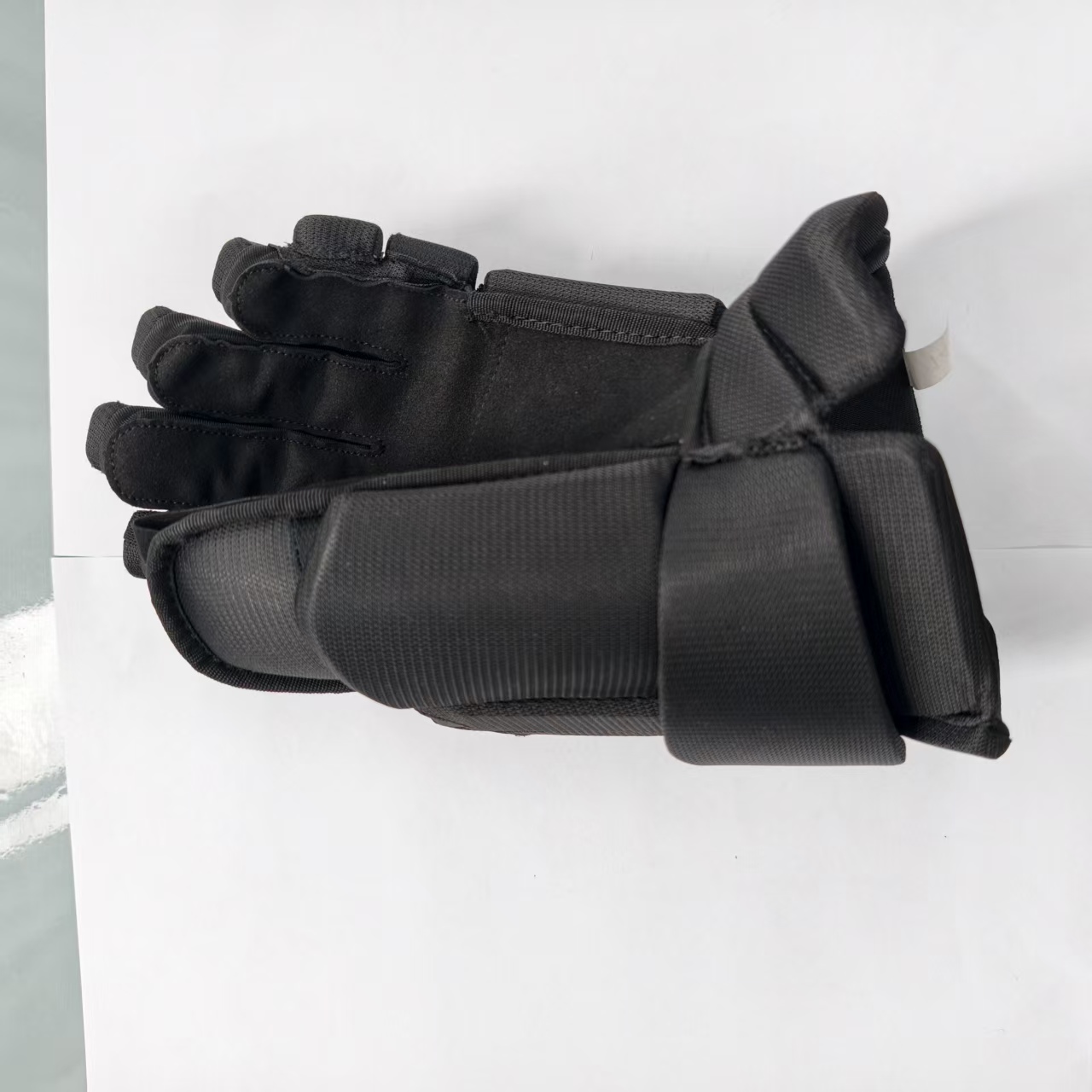
The cuff should coordinate with the elbow pad and permit the intended wrist movement.
Closed around the stick
The player should close the glove naturally without material bunching or finger restriction.
3. Use size bands carefully
| Planning band | Common nominal sizes | Purchasing note |
|---|---|---|
| Youth / junior development | Often found across approximately 8-12 inch ranges | Do not choose from age alone; confirm platform availability and wrist coverage. |
| Intermediate transition | Often centered around approximately 12-13 inches | This group frequently overlaps junior and senior families, so sample confirmation matters. |
| Senior | Often found across approximately 13-15 inch ranges | Hand volume and fit family can change how the same labeled size feels. |
These bands are orientation only, not a universal KSM size chart. The final range and grading must be confirmed against the glove construction selected for the project.
4. Build a team roster size matrix
A useful team file should include player name, number, playing level, current glove brand/model, current size, measured hand length, preferred fit and confirmed order size. Mark uncertain players for a fitting check instead of forcing an estimate.
- Keep one version owner -- normally the equipment manager.
- Freeze the roster at an agreed approval date.
- Separate confirmed sizes from pending sizes.
- Record late additions and replacements as revisions.
- Retain the approved matrix for future repeat orders.
5. Plan samples around the highest-risk sizes
A team may not need a physical sample in every size, but the selected samples should answer real questions. Consider the center of the roster, an overlap size such as junior-to-intermediate, and any size with unusual fit concerns. Commercial buyers should review grading across the planned assortment rather than inspecting only one sample size.
Common sizing mistakes
- Ordering by age group without measuring or fitting.
- Assuming every brand or glove family fits identically.
- Using one player's preference for the entire roster.
- Ignoring the relationship between glove cuff and elbow-pad coverage.
- Changing the roster spreadsheet after approval without revision control.
- Approving artwork while leaving sizes unconfirmed.
Hockey glove sizing FAQ
What if a player is between two sizes?
Compare both sizes in the intended glove platform. Finger seating, palm alignment, wrist coverage and preferred fit should decide -- not the label alone.
Can youth and adult players share one custom design?
A visual program can often be coordinated across several sizes, but available construction and logo zones may vary by size family. Confirm this before approving the design.
Should a club keep previous roster records?
Yes. An approved roster and product reference make replacements and seasonal reorders easier, although growing players should be measured again.
Organize your roster before requesting a quote.
Share confirmed sizes, pending sizes and the glove platform you want to evaluate.