Editorial review: KSM Product Development Team · Updated 8 October 2026
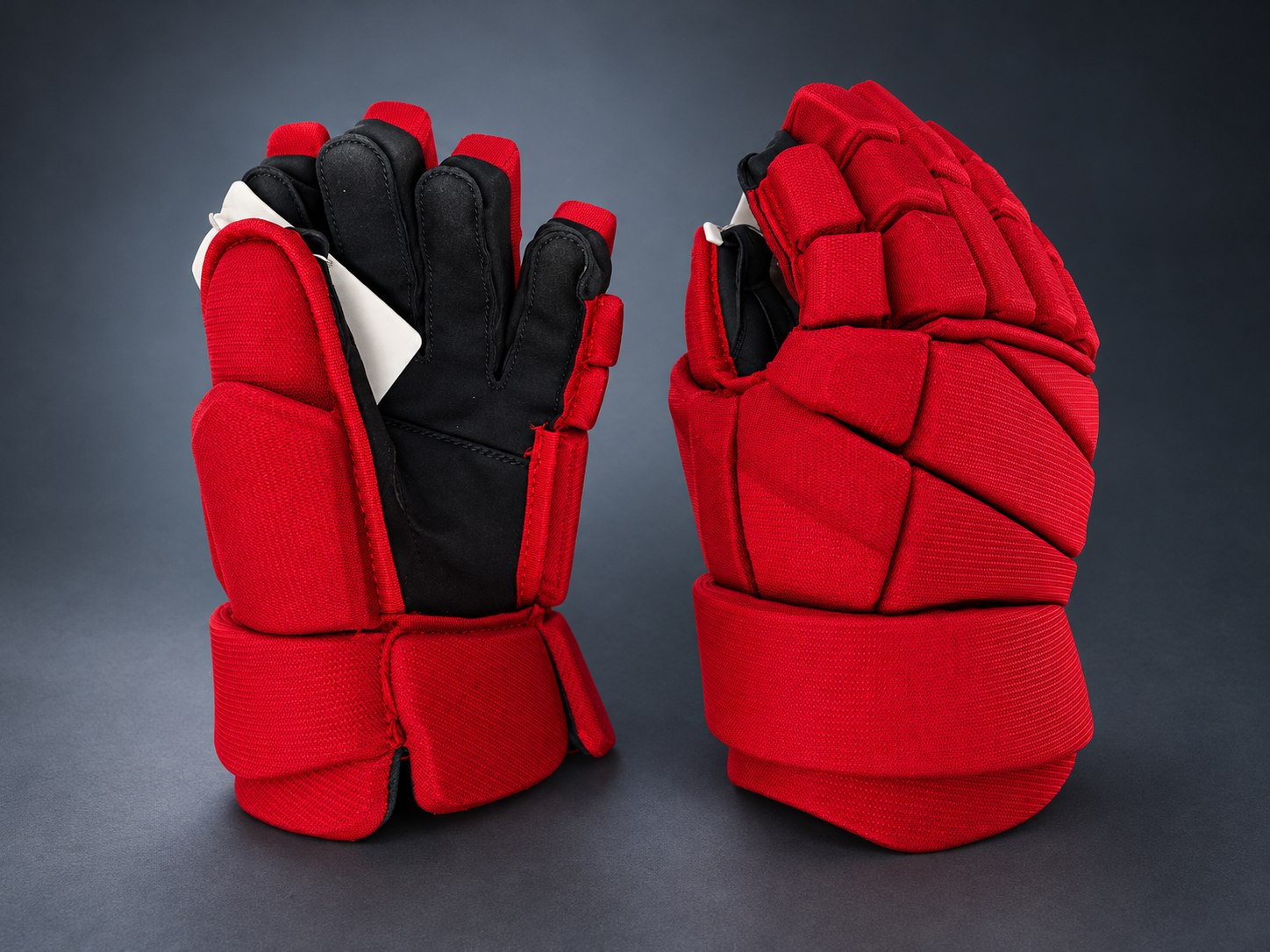
A useful custom hockey glove brief defines the player, fit, protection direction, palm, cuff, colors, branding, size run and sample route before price is discussed. A physical sample then becomes the approval reference for the bulk order.
"Custom"can mean very different things. A team may need an established glove platform in club colors with a crest. A distributor may need a market-ready assortment. A hockey brand may want private-label execution or a product developed around its own specification. Clarifying that route at the beginning prevents design expectations from being mixed with engineering decisions.
1. Start with the buying route
Coordinate the roster
Prioritize colors, logo placement, player sizing, consistent appearance and repeat-order identification.
Apply a commercial identity
Start from an aligned product platform, then define labels, branding, packaging and market position.
Modify selected specifications
Adjust agreed materials, fit direction, construction details or styling without treating the project as a completely new design.
Develop a controlled product brief
Align target user, performance goals, materials, prototypes, evaluation and production approval.
2. Define the player before the glove
A glove for a youth development program should not be specified in the same way as a senior competitive product. State the age group, playing level, expected use, target market and preferred size range. For commercial buyers, also define the intended product position and the products against which it will be evaluated.
- Player group: youth, junior, intermediate or senior.
- Use: training, recreational play, competitive team program or retail range.
- Fit direction: close anatomical feel, tapered wrist with hand volume, or a roomier traditional profile.
- Size plan: individual roster sizes or a commercial assortment by market.
3. Build the glove specification
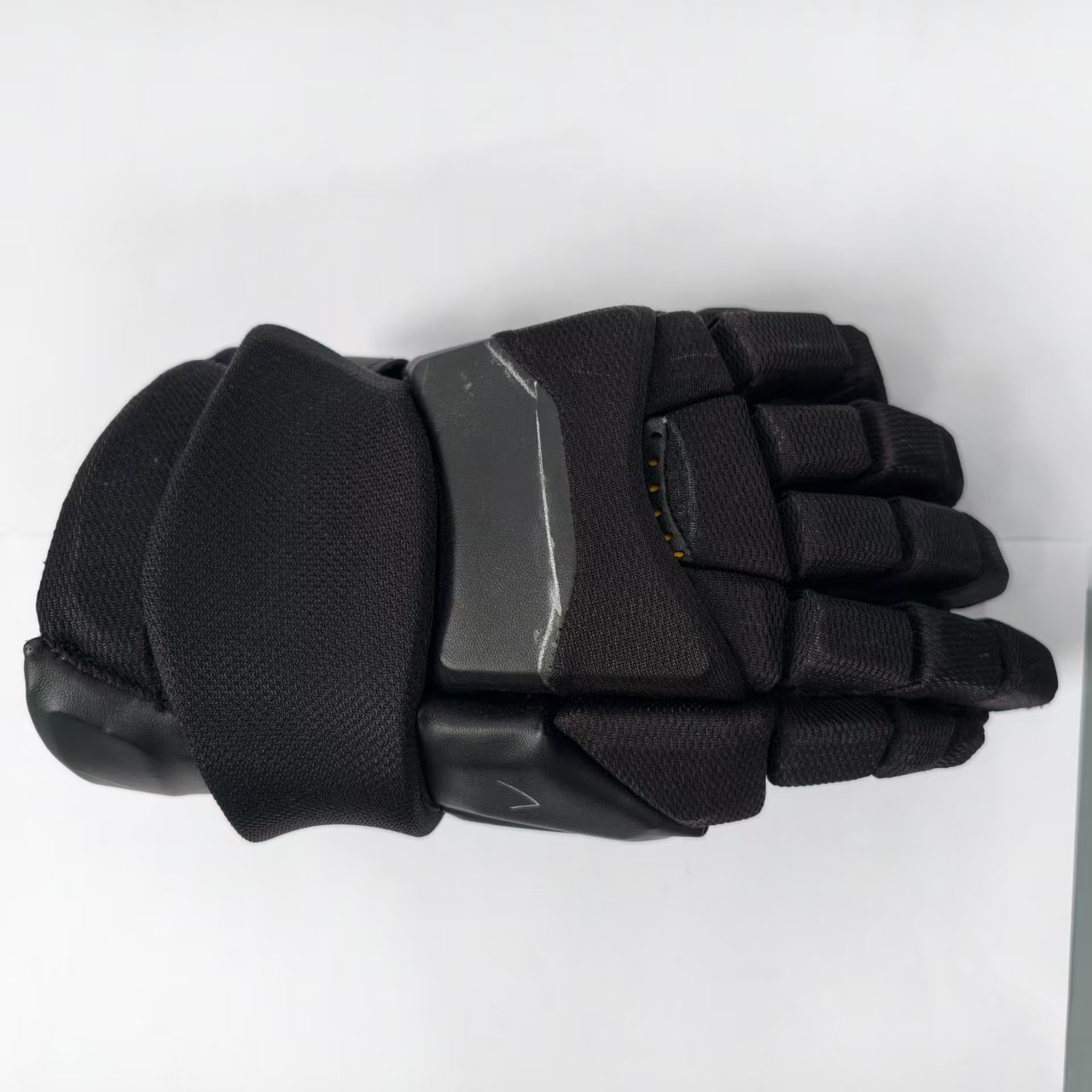
| Decision area | What the buyer should define | What to review on a sample |
|---|---|---|
| Fit architecture | Hand volume, wrist feel, finger shape and intended mobility | Finger seating, grip closure, wrist movement and consistency |
| Protection concept | Target player level, foam direction, inserts and coverage | Backhand, fingers, thumb, cuff and any exposed gaps |
| Palm | Desired balance of feel, grip, durability and reinforcement | Seam position, overlays, stick feel and wear areas |
| Cuff | Open, close or segmented direction and branding needs | Range of motion, overlap and logo visibility |
| Shell & liner | Material direction, ventilation, comfort and visual finish | Surface quality, stitching, internal comfort and drying behavior |
| Brand execution | Color zones, logo locations, labels and approved artwork | Scale, legibility, placement and color relationship |
4. Plan colors and branding as a system
Do not send only a low-resolution logo and the words "navy and red."Provide color references, vector artwork where possible, the preferred placement, and a hierarchy for the team name, crest, player number and manufacturer or private-label identity. Screen appearance is not a reliable physical color standard, so the sample stage should include an agreed method for evaluating color.
Branding should follow the product geometry. The cuff and backhand are common visible areas, but the practical zone depends on seams, padding segments and glove movement. Keep important lettering away from folds and split lines.
5. Build a size matrix, not an average
A team order should record every player's size rather than estimate one "typical"size for the group. Commercial buyers should define the intended size assortment by customer and market. Because fit differs between glove constructions, the size label alone is not enough: confirm the selected platform, size reference and sample.
6. Use the sample as the approval point
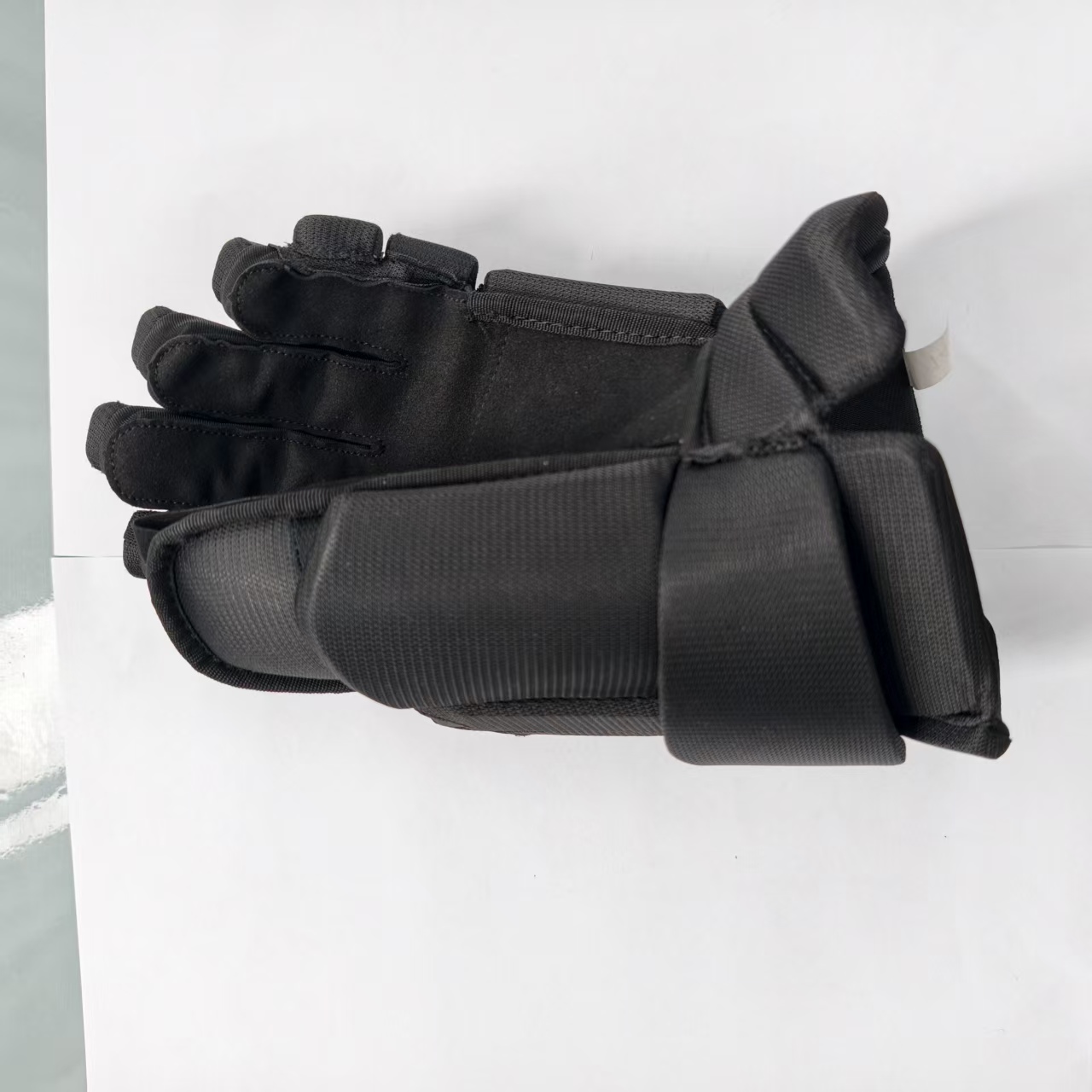
- Review the overall silhouette, fit direction and range of motion.
- Check protection coverage, thumb behavior, cuff overlap and finger segmentation.
- Inspect palm alignment, reinforcements, stitching and internal comfort.
- Confirm colors, artwork scale, placement, labels and packaging direction.
- Record every requested revision in one consolidated approval document.
- Approve the agreed pre-production reference before the bulk order proceeds.
7. What to include in a quotation request
- Buyer type and organization name
- Target player, market and product level
- Preferred fit and reference products
- Required sizes and estimated quantity
- Colors and usable logo files
- Desired materials or performance direction
- Sample expectation, target timing and delivery country
- Packaging, labels or confidentiality requirements
Custom hockey glove FAQ
Can team gloves use different sizes in one visual design?
That is normally the purpose of a team program: one approved visual direction is coordinated across a roster size matrix. The exact available range must be confirmed for the selected glove platform.
Is a digital mockup enough for production approval?
A mockup is useful for color blocking and logo placement, but it does not prove physical fit, materials, stitching or protection geometry. A physical sample is the stronger approval reference.
Should a buyer specify an MOQ before discussing the product?
Start with an honest estimated quantity, but do not publish or assume a fixed MOQ without confirming the product, customization route and current production conditions.
Turn your glove idea into a usable brief.
Tell KSM whether you are buying for a team, a brand or a distribution program.